In this post, I use the free YearCompass booklet to reflect on 2025 and to plan some personal goals for 2026.
Introduction
It’s time for the customary retrospective post!
Each year, I use YearCompass to reflect on the past year’s events and consider what lies ahead. This post will follow the same structure: I’ll provide a brief overview of YearCompass, reflect on how 2025 went and then look forward to 2026.
Well, mostly the same structure. My 2026 goals don’t use User Stories anymore, as I’ve replaced them with Identity Statements. Let me explain why…
About Identity Statements
In previous years, I’ve used User Stories for YearCompass goals. These are structured, task-oriented and outcome-focused.
They are effective in the right context, but I no longer think they’re the right fit. They’re rigid, assume a clear definition of success and usually frame things in terms of completion. That doesn’t align well with personal growth, which often exists in shades of grey.
So I’ll now be using Identity Statements instead. As discussed in James Clear‘s 2018 book Atomic Habits, Identity Statements are internal character affirmations that focus on the type of person one wishes to become, rather than on the specific tasks one wants to complete. I’m using them because:
- They prioritise character development over achieving specific outcomes.
- They offer resilience and adaptability. Unlike rigid goals that feel “failed” when criteria aren’t met, an Identity Statement represents a continuous path that can be strengthened through every small action.
- They create lasting change by first transforming self-image. This transformation lets the necessary habits and actions naturally emerge from that changed identity.
An example of an Identity Statement is:
I am a disciplined and curious learner who explores new ideas daily, maintains a consistent reading habit, and shares insights to help others grow.
This interview with James Clear further explains the concept of Identity Statements:
About YearCompass
From the YearCompass site:
YearCompass is a free booklet that helps you reflect on the year and plan the next one. With a set of carefully selected questions and exercises, YearCompass helps you uncover your own patterns and design the ideal year for yourself.
YearCompass provides a free alternative to New Year’s resolutions. The booklet is available as A4 and A5 PDFs in multiple languages and can be completed either digitally or by hand.
YearCompass PDFs include two sections: reflecting on the past year and planning for the upcoming year. Each section features prompts designed to help users assess their priorities and prepare for the future.
There are no strict guidelines for completing YearCompass. Some people take breaks between sections, while others prefer to finish it in one sitting. Personally, I prefer to focus on specific sections rather than go through the entire document, since I usually have what I need by a certain point.
2025 Goals
In this section, I reflect on my YearCompass 2025 goals and evaluate my progress with them.
Community Investment
As an active tech community member, I want to support and grow these communities through content, involvement and participation so that both the communities and I thrive.
How It Went
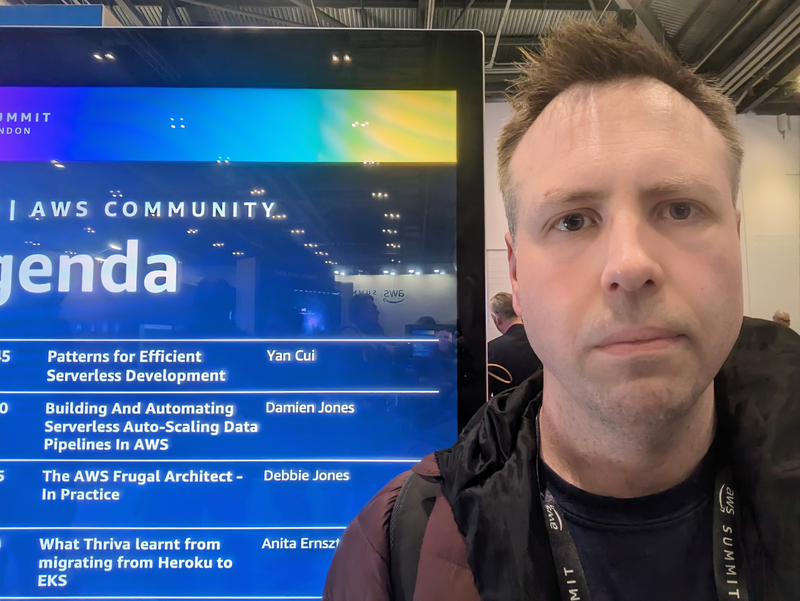
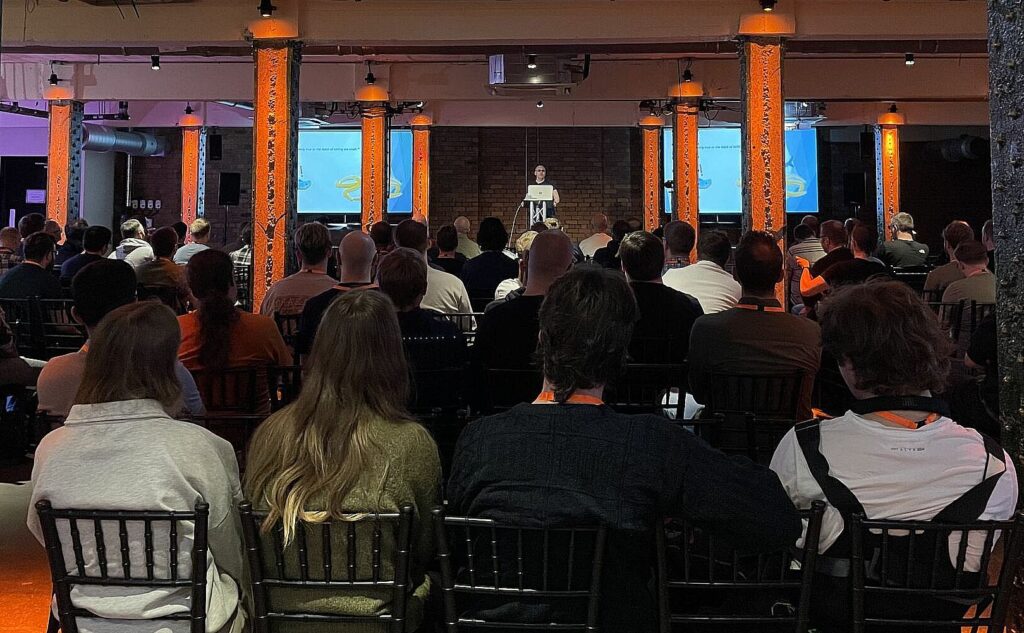
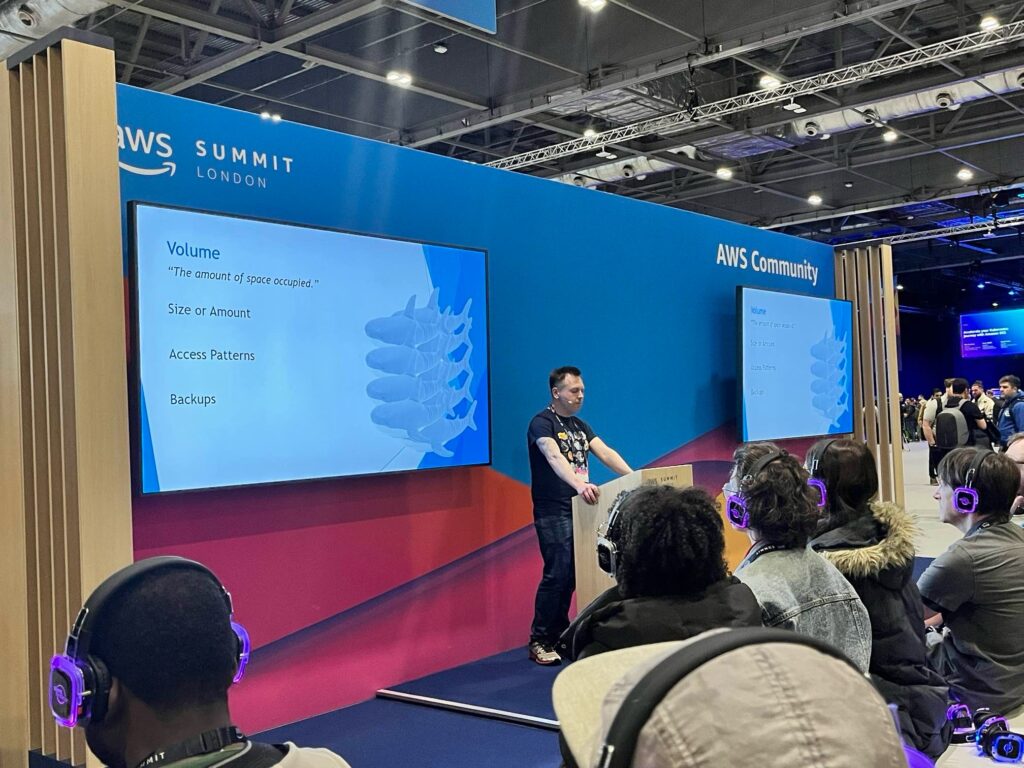
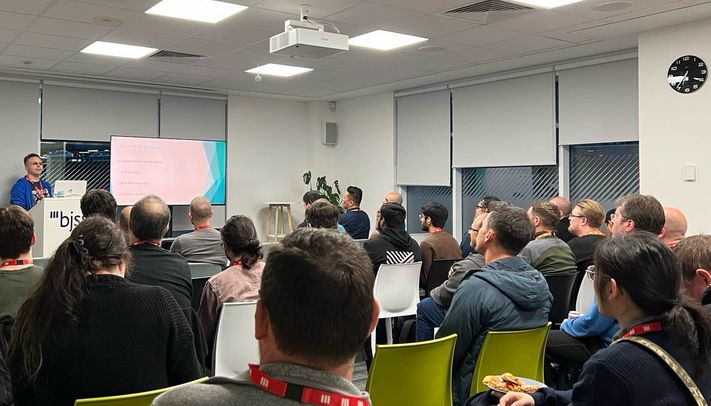
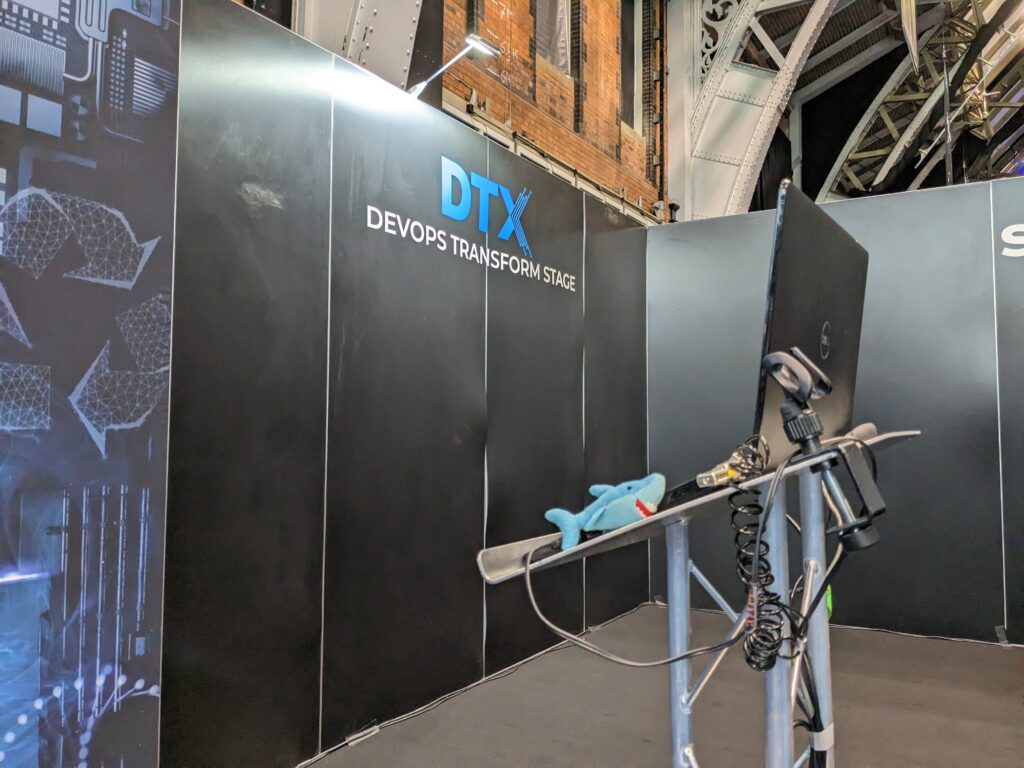
Let’s start this section by talking about Step On It! – a session I wrote after being invited to speak at DTX Manchester‘s event at Manchester Central in April. This was the beginning of a wild ride, yielding six speaking opportunities both domestically in Manchester, Leeds and London, and internationally in Dublin and Utrecht. It still blows my mind that this little shark gets to do any of this!

Also, I was accepted into the AWS Community Builder program in March. People apply to the program for various reasons, and my personal reasons were:
- Early access to sessions on new products and services before official launch.
- Opportunities to share ideas and challenges with other builders.
- The promotional credits, which have been very handy!
Community Builders must reapply annually, and I’m hopeful for a second year!

Elsewhere, I said yes to two opportunities that pushed me out of my comfort zone: appearing on Karl & Jon‘s LogiCast podcast and returning to Ada for an IaC lecture. I took both on deliberately because I want to practise being more spontaneous. There is still work to do here, but I am very much up for more of the same in 2026.

There’s also something else to discuss that relates to both this and another of my 2025 goals, but we’ll get to that…
Reflections
Overall, this goal went very well. I’ve decided Community Investment isn’t a goal I’m carrying forward into 2026 for two reasons.
First, I feel that setting the same goal again would be a cop-out, since YearCompass is about progress and moving forward. Additionally, I’ve come to realise that I will continue my community involvement regardless of whether it’s on a goal list. It has become a natural part of how I operate, rather than something I need to commit to explicitly.
So instead of formalising it again, I want to focus on something new that sits alongside it.
Gestalt Cycles
As an individual with multiple workstreams, I want to apply Gestalt cycles to recognize when a task is complete and take intentional breaks, so that I can improve my wellbeing and maintain consistent energy and focus.
How It Went
I set this goal after feeling burned out at the end of 2024. My sleep was off, my energy was low, and while I had plenty of ideas I was doing too much without taking breaks.
Gestalt appealed because it focuses on completing tasks and taking breaks, rather than always being in motion. I wanted to move away from constantly being always-on; instead, I wanted to create time for non-work activities without feeling like I have to earn this time through exhaustion.
In early 2025, I went through a light version of To-Do List Bankruptcy. I reviewed my long-running tasks to determine whether they still held value or if they were just taking up space. Several items were removed or deprioritised. More importantly, I resisted the urge to replace them right away. And while leaving my task list shorter initially felt uncomfortable, that open space was exactly what I had been missing.
This change brought some clear benefits. I found more time for reading – not only by reading more books but also by letting some go. Completing a book or deciding not to finish one became a signal that a cycle was complete, rather than something to optimise continuously. This approach created space for the books I actually wanted to read, including two that I reviewed.
I also used the time to take better care of myself. I joined the Steamhaus Vitality scheme in March and regularly used the provided fitness and wellbeing apps, reaching Vitality’s Platinum status in November.

Additionally, I started running again and ended the year with 350 miles, my furthest since 2021. Progress has been slow, but consistent. Running, in particular, gave me a clear sense of a complete cycle: start, effort, finish, recover – then rest before the next run.

Reflections
In summary, this was a partial success. My physical and mental health have both improved, and I am now much more aware of my energy levels and overall wellbeing than I was a year ago.
However, one part of the Gestalt cycle still needs work – withdrawal. In theory, withdrawal should lead to rest and renewal. In practice, I can recognise when something is finished, but I don’t yet have a clear sense of what proper rest looks like for me.
It’s not a failure of the idea – it’s a signal that further insight is needed. There’s still work to do in understanding how I recover, not just how I stop. This directly connects to one of my goals for 2026.
Be The Change
As a hard working dog dad, I want to confidently embrace and act on my ideas and opinions so that I can make meaningful contributions and changes to myself, my peers and clients and the wider tech community.
Ah – the LinkedIn goal. It was well-intentioned (and loosely based on something already in motion at the time), but the wording isn’t my style and isn’t something I’ll carry forward.
Right. In my YearCompass 2024-2025 post I said:
…I’ll have some exciting news to share soon about something I’m part of!
Well, I launched a user group! Let’s talk about AWS User Group Lancashire.

How It Went
Beginnings
In September 2024 I first met Cat Mawdsley and Dan Knowles at Northern Reach. Northern Reach delivers technology and innovation-driven business initiatives for public and private-sector partners in Northern England.
I hadn’t even planned to discuss the prospect of a user group. I mentioned it in passing and Cat snatched my hand off! We exchanged details and agreed to stay in touch. Looking back, I don’t think either of us knew what we’d just gotten ourselves into.
Cat and I bring complementary strengths: she excels at community coordination and enablement, while I bring technical knowledge and connections with community speakers and AWS contacts. We also both have a personal motivation to elevate the region’s profile!
Why Lancashire?
There are several reasons:
- Personal Connection: I was born and raised in Lancashire, and I’ve always felt a strong connection to the region. It’s home – family, history and a lot of my story starts here.
- Closing the Distance: Although there are various tech community events in Manchester, Merseyside and Yorkshire – and some in Lancashire – there wasn’t much representation from the major cloud platforms like AWS locally. Often, ‘local’ still meant having to travel. I wanted to create a truly local event to support Lancashire’s growing tech scene.
- Building a Hub: I wanted to create a space where professionals, students and enthusiasts could come together – somewhere to share ideas, learn and meet others.
- Growth: I wanted to help put Lancashire more firmly on the UK map for talent, investment and the wider tech community.
Outcomes
The first AWS UG Lancashire event took place in February 2025 as part of the AWS re:Invent recap UKIE tour.

Burnley College hosted us at their BCUC (Burnley College’s University Courses) centre. As a former BC student, this was a proud personal moment. It also meant I got to introduce Matheus Guimaraes to my hometown, during which he met with local authorities and got a tour of the town and college.
That evening, we hosted around forty people – developers, local professionals and a handful of familiar faces from the wider AWS community, all in the same room for the first time.

We had further events at Chorley in May with Chris Dobson and Matt Houghton, and at Leyland in November with Kate Gowron and Paul Ross.

Reflections
Overall, this was both a big personal win and a wake-up call. I acted on an idea, committed to it publicly and helped create something valuable for Lancashire. Seeing it all come together made the effort incredibly worthwhile.
It also highlighted a few things that are easy to underestimate from the outside.
Leadership Is Scary
Planting a flag and summoning people to it is a vulnerable move. Before the first event, there was a real possibility that nobody would show up – or that they would and regret it. Or that something major would go wrong. Those feelings don’t go away with experience. They just become more familiar and manageable. And I am very much still learning the UG Leader ropes!
The Leyland event illustrated this well. The venue’s large TV, kindly provided by the local council, wasn’t actually attached to the wall! So I ended up balancing a 27-inch monitor on a box of AWS t-shirts and a stack of Costco waters:

Nobody in the room seemed to mind, and the event carried on regardless. That experience highlighted something very true about leading community events: things go wrong in unexpected ways, and the job is to stay calm and keep moving.
Leading is still scary. It continues to be scary. And it continues to be worth doing.
Scheduling Is Hard
Scheduling is hard, and scheduling user groups is no exception! Finding dates that worked for speakers, venues, organisers and attendees – all with competing priorities – is a constant challenge. A lot must come together for a community event, and fortunately I have some great people supporting me!
In 2025 there were three UG Lancashire events, and my goal for 2026 is to hold four. As my network of supporters, speakers, and attendees grows, I want to implement processes to manage this expansion and streamline logistics so my ambitions can flourish.
The Demand Is There
One thing became very clear throughout the year: there is real demand for local events in Lancashire. People consistently said how valuable it was to have something nearby instead of having to travel.
This interest extends beyond just AWS. Topics such as serverless computing, modernisation and AI are relevant across multiple vendors and job roles, and there is a clear desire for a local space to discuss them.
That’s not a small thing. It signifies that the work is meaningful and should be done properly. This also connects to the reasons I initially started the group. The focus for 2026 isn’t growth for growth’s sake – it’s about making the group reliable enough to justify the journey, even if it’s just a short one.
Onwards
There’s more to do. Maintaining momentum, ensuring the group stays valuable and balancing it with everything else in my life.
For 2026, the focus is consistency: better scheduling, stronger speaker and promotion pipelines and fewer last-minute scrambles. Not more for the sake of it, but for something reliable, sustainable and worth showing up for.

2026 Goals
In this section, I will use YearCompass to determine my goals for 2026. For each goal, I’ll write an Identity Statement and explain my reasoning.
Cultivate a Maker Mindset
I am an intentional maker – someone who explores the physical and mental world through repair, construction and play. I treat the act of doing as essential for achieving clarity and focus.
Background
2025 was a busy year. Alongside the various work, community and personal projects I’ve already discussed, there were also some smaller activities. While these didn’t receive much attention, they ultimately proved to be very valuable for my mental health.
Two in particular stand out:
Path Maintenance: The back garden paths have gaps where grass grows through, creating uneven and potentially hazardous areas. Weeding is only a temporary fix as the grass quickly regrows, and using weed killer is unsafe for pets and can contaminate the garden.
So, over the summer, I learned how to mix cement, bought the necessary materials and spent some time on part of the path, a section of which is shown below. It’s been grass-free and much safer ever since!

Electronics Repair: Our hedge trimmer stopped working due to a damaged cable. A new one would cost £100+, and without it the garden was getting unruly.
So I learned to use wire strippers, safely splice cables and properly apply heat-shrink tubing. After that, I set to work fixing the cable. While the result isn’t the best-looking, it’s electrically safe and I can use the trimmer now!

So yes – I’ve turned into a tinkerer! And I want to explore this.
Plan
In 2026, I want to intentionally set aside more time for tinkering, building and fixing things. It turns out I enjoy it, both for satisfying my curiosity and as a respite from my technology-focused main workload.
I’ve already felt the benefits. Fixing things around the house, repairing various breakages and even just experimenting – it all created natural breaks between larger pieces of work. It supported exactly what I was aiming for with my previous Gestalt and Cult Of Done goals: a sense of definite completion, followed by a full pause.
So in 2026 I’m going to carve out time and focus for more of it! Some of this time will be spent on larger, varied projects like training roses and fixing iPods. Others will be smaller acts of ‘adult play’, such as soldering electronic kits or building Lego models.
I’m not planning to document all of it. Keeping it informal and unstructured is part of the point. But I’ll share the occasional snapshot on the shark socials, and maybe even dust off that YouTube channel…
Meaningful Milestones
I am someone who pursues goals with intention. Before committing to something significant, I ask what it will mean when it’s done – not just whether it can be done. The work that stays with me is never the work I finished fastest.
Background
As discussed, 2025 was a big year.
Eighteen months into Steamhaus, the role continues to grow both technically and interpersonally. Elsewhere, speaking at conferences and on podcasts became more regular, as did leading the user group. Alongside that, multiple blog posts, three exams, six talks across three countries and finally making a dent in the reading pile.

That’s a lot. But looking back with YearCompass, not all of it felt meaningful.
I mentioned in the Gestalt section that I’d already trimmed my to-do list going into 2025. Even so, some surviving goals still felt like going through the motions. The certs didn’t feel like they deserved celebration. Some of the books got speed-read. Tasks were getting done, but…so what?
What those goals had in common was a simple end state: done. There was no answer to the question of what actually changes when they’re finished. Compare that to repairing the hedge trimmer or cementing the garden path. Those stuck out. Not because they were hard, but because the result mattered afterwards. The garden looked better. Equipment returned to use.
The certs and books weren’t wasted time. Certifications validate current knowledge and expose gaps worth filling, and the books were definitely worthwhile. But there’s only one of me and only so many hours in the day. My overloaded task list quietly crowded out personal hobbies, family time and recreation. The ratio was off.
Plan
The lesson going into 2026 is simple: where possible, pursue tasks and milestones that mean something. This won’t apply to everything – quick tasks are fast by nature, and some things just need doing. But for anything that needs sustained effort, having a clear answer to why this matters will be vital.
The AWS DevOps Professional certification is a good example. The practical reason is simple – my SysOps Associate expires in October and the Pro cert will also renew that one. But it’s also the first Professional-tier AWS certification I have attempted. Earning this will do what the Associate certifications haven’t: eliminate the background noise of imposter syndrome with something concrete and tangible. Therein lies the meaningful aspect for me – it’ll improve my self-image.
So keep an eye on my Credly badges this year!
And speaking of improved self-image…
Metacognition
I am an architect of my own thinking. I pay attention to how I think, not just what I think, so that I can respond with clarity rather than react on instinct.
Background
Last year’s Gestalt goal was about recognising the rhythm between effort and rest. And while it changed how I think about energy, it also raised another question: If the pattern of thinking matters, what about the quality of the thinking itself?
That question led me back to The Chimp Paradox by Steve Peters – a book I’d owned for years but never properly finished. And when I finally did, the themes around self-regulation, emotional response, and the gap between instinct and intention stuck with me. This started me on a new journey that eventually led to metacognition.
Metacognition is usually defined as an awareness of one’s own thinking processes – often described as “thinking about thinking.” Psychologist John H. Flavell introduced the term in the 1970s, and it is commonly broken down into three stages: planning, monitoring, and evaluation. Establish a goal and select suitable tools, monitor their effectiveness and evaluate the outcomes.
This approach treats the mind like a system, focusing on visibility, feedback loops and continuous improvement. Something I can easily relate to as a technologist!
Plan
There are two areas of my life where I feel metacognition could help:
Learning Metacognition
Metacognition is a valuable tool in education that helps learners understand their thinking processes and take control of their learning. By reflecting on their performance and learning from successes and failures, students can adjust their strategies and problem-solving methods rather than just trying harder.
This aligns well with my responsibilities at Steamhaus, where I must regularly assess my knowledge and address any gaps in relation to client projects. The rapidly changing technology landscape can feel overwhelming, and by enhancing my metacognitive skills, I can better identify what to learn and recognise when I have a sufficient understanding of a given topic.
This mindset influences not only my work but also my daily life. Running a household, tending a garden and exploring new interests often need me to learn new things, adjust as needed and evaluate what actually works. By using a more thoughtful metacognitive approach in these areas, I can better prepare for unexpected challenges in the future.
Psychological Metacognition
Metacognition in psychology lets individuals recognise their thought patterns, monitor their emotional responses and understand the root causes of their reactions. This understanding fosters the creation of healthier coping strategies and encourages more adaptive behaviours.
I’ve spoken previously about my struggles with anxiety, insecurity and patterns of overthinking. My hope is that metacognition will help me identify emotional triggers, challenge automatic assumptions and respond more intentionally in the moment.
Additionally, I want to investigate whether this approach can enhance my emotional regulation, decision-making under stress, and communication and boundary-setting with others.
Summary
In this post, I used the free YearCompass booklet to reflect on 2025 and to plan some personal goals for 2026.
The process has highlighted several important lessons—especially regarding what feels meaningful to me, how I manage my energy, and how I approach personal growth. As a result, I’m trying something different this year: instead of focusing on what I want to achieve, I am concentrating more on the kind of person I want to become.
I’m curious to see where this leads. I will share updates here and on my social media, as well as in projects and sessions. You can find these by clicking the button below.

Thanks for reading ~~^~~